A bright strip reaches the pillow before the alarm, but buying heavy curtains immediately may solve the wrong problem. First decide whether the room needs blackout treatment or only better coverage around an otherwise adequate blind.
East-facing bedroom windows need blackout treatment only when morning light reaches the sleeper too early
East-facing windows do not automatically require blackout curtains. Stronger control is justified when direct or reflected morning light reaches the pillow before the intended wake time and disturbs sleep. Season, latitude, exterior obstructions, window geometry, existing blinds, and the sleeper’s schedule determine whether filtering, room-darkening, or blackout treatment fits the room.
A Somnologie review of light and circadian biology explains that changing ambient illumination affects sleep and wakefulness, but it provides no universal bedroom lux threshold. The review also reports that nocturnal light can alter circadian rhythms and sleep while qualifying the exact relationship with circadian sleep-wake disorders.
Sleep Foundation guidance treats light as a strong regulator of the internal clock while noting that morning sunlight may support sleep timing. The practical question is not whether dawn exists, but whether dawn arrives before this sleeper should wake.
Direct sunlight forms a defined bright patch or beam. Diffuse daylight brightens the glazing, ceiling, and pale walls without a sharp beam. Indoor electric light comes from lamps, screens, corridors, or exterior fixtures and requires a separate correction. Useful bedroom accessories ideas put these sleep functions before fabric colour or decorative layering.
- Keep the existing treatment: Morning light appears at or after the intended wake time and does not cause waking.
- Improve edge coverage: Light enters mainly around the headrail, sides, centre split, or sill while the main fabric remains dark.
- Add blackout treatment: The window or room becomes bright well before the alarm, especially for night-shift sleepers, light-sensitive adults, or children whose required sleep extends past sunrise.
A three-morning check shows whether an east-facing bedroom has a real light problem
Test on three representative clear or partly clear mornings rather than buying after one unusually bright sunrise.
- Set the existing blind or curtain exactly as it would be overnight. Check the room before the intended wake time from the sleeper’s eye position on the pillow.
- Record the time, weather, local sunrise time, treatment position, visible perimeter gaps, and whether light caused waking. Inspect the window edges, ceiling, reflective walls, and any mirror facing the glass.
- Repeat across three mornings. A phone light-sensor application can compare the same position before and after a change, but its reading is not an absolute lux measurement unless the device and application have been validated.
Season can change the result because the Sun rises at different points along the eastern horizon during the year, as Weber State University’s solar-path explanation shows. Sunlight intensity also changes with solar angle. Latitude, overhangs, trees, neighbouring buildings, glazing angle, and reflected light modify what reaches the bed.
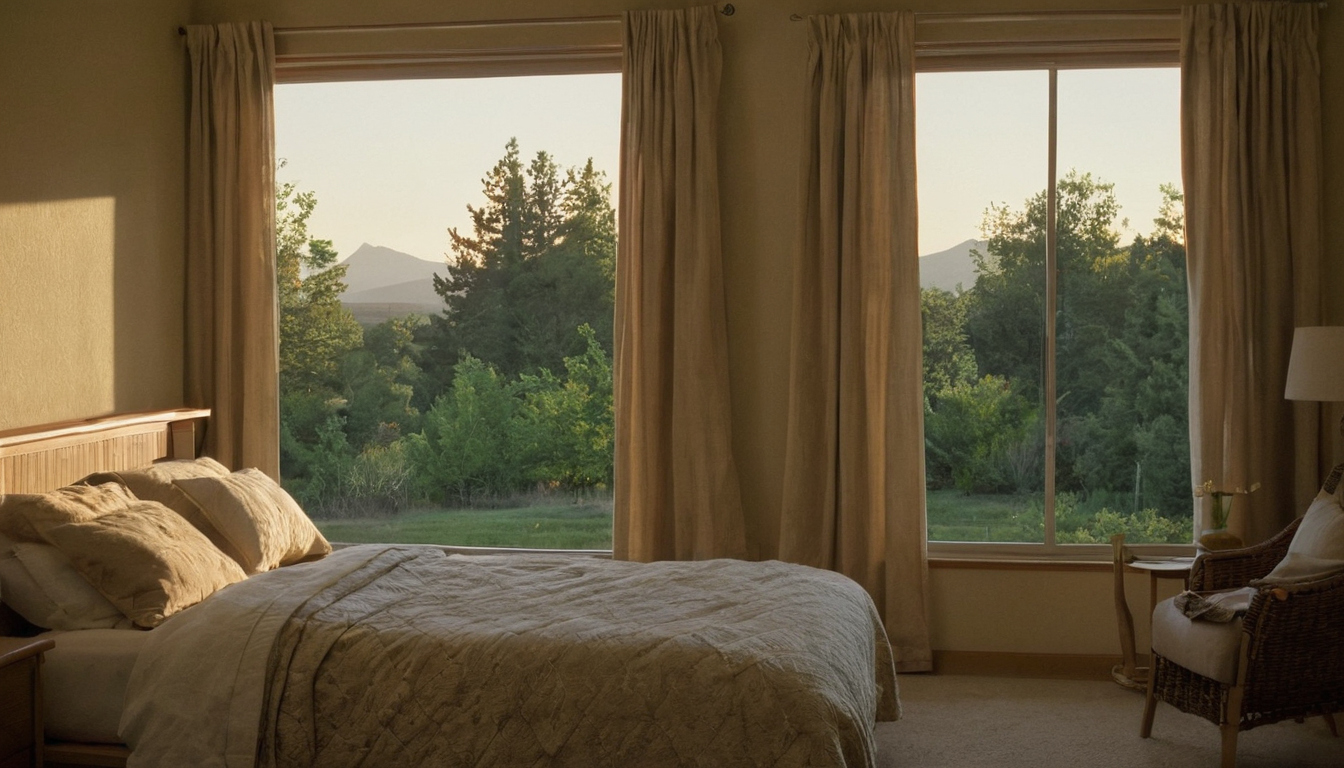
East-facing bedroom windows need blackout treatment only when morning light reaches the sleeper too early shown with practical context cues.
The NOAA Solar Calculator accepts geographic position, including latitude from -90 to +90, but NOAA states that the calculator is no longer actively maintained and does not guarantee its accuracy or functionality. Treat its sunrise result as planning context, not a substitute for checking the pillow.
Electric lighting is not automatically timed for circadian support. A Frontiers in Photonics consensus report involving 248 scientists with 2,697 peer-reviewed publications reports that less than 0.5% of lighting sold changed both spectral content and intensity between day and night. That market statement does not specify curtain performance, but it reinforces the need to inspect electric sources separately.
During the morning check, inspect the sill for condensation. The EPA moisture-control guide advises correcting condensation and damp spots promptly. If premature light is confirmed, inspect its route before buying: dark-looking fabric can still leave a bright room when its edges remain open.
Blackout performance depends more on edge control and mounting position than on dark-looking fabric
A blackout-labelled panel can leave a bright bedroom when light passes above the rod, around the sides, between paired panels, or below the hem. Effective coverage requires opaque material plus controlled perimeter gaps. Colour does not prove opacity, and a room-darkening label does not establish blackout performance.
Where does light leak around curtains and shades?
Inspect the window from the pillow rather than standing beside the glass. Direct light may enter from a different angle across the year. At mid-northern latitudes, the Sun rises north of due east near the June solstice and south of due east near the December solstice. At 41° north, daylight duration also differs substantially between June and December.
Figure 1: Four window-treatment leakage paths
Diagram brief: View the window as a rectangle from inside the bedroom, with four marked inspection zones.
- Head gap: Light passes above a curtain rod or behind an exposed shade roll. A wraparound rod, pelmet, cornice, or cassette headrail can reduce this opening.
- Side gaps: Light escapes beside the fabric or shade. Curtain returns, wider outside mounting, side channels, or magnetic edges can bring coverage closer to the wall or frame.
- Centre split: Paired curtains separate where they meet. Overlapping centre panels or a closing fastener control the vertical line.
- Sill or hem gap: Light passes below a short shade or curtain. Coverage must extend beyond the bright opening without contacting a heater or blocking window operation.
Inside-mounted shades fit within the recess, but trim irregularities, shallow recesses, handles, tilt mechanisms, and insect screens can enlarge gaps or prevent close placement. Outside-mounted treatments usually cover more of the opening when sufficient wall or trim surface exists. Deep sills may still reflect light beneath either arrangement.
Blackout fabric and a blackout installation are not the same specification
Fabric opacity describes light transmission through the material, not around the finished treatment. Whole-window performance also depends on finished width and drop, centre overlap, side returns, mounting clearance, cassette or channel design, and obstructions at the frame.
Retail terms such as blackout, room-darkening, and light-filtering require manufacturer-specific verification. Any numerical light-blocking claim needs its stated test method and must clarify whether the result covers fabric alone or the complete installed product. A dark multilayer textile may look opaque in a product photograph while the installation still produces bright edge lines.
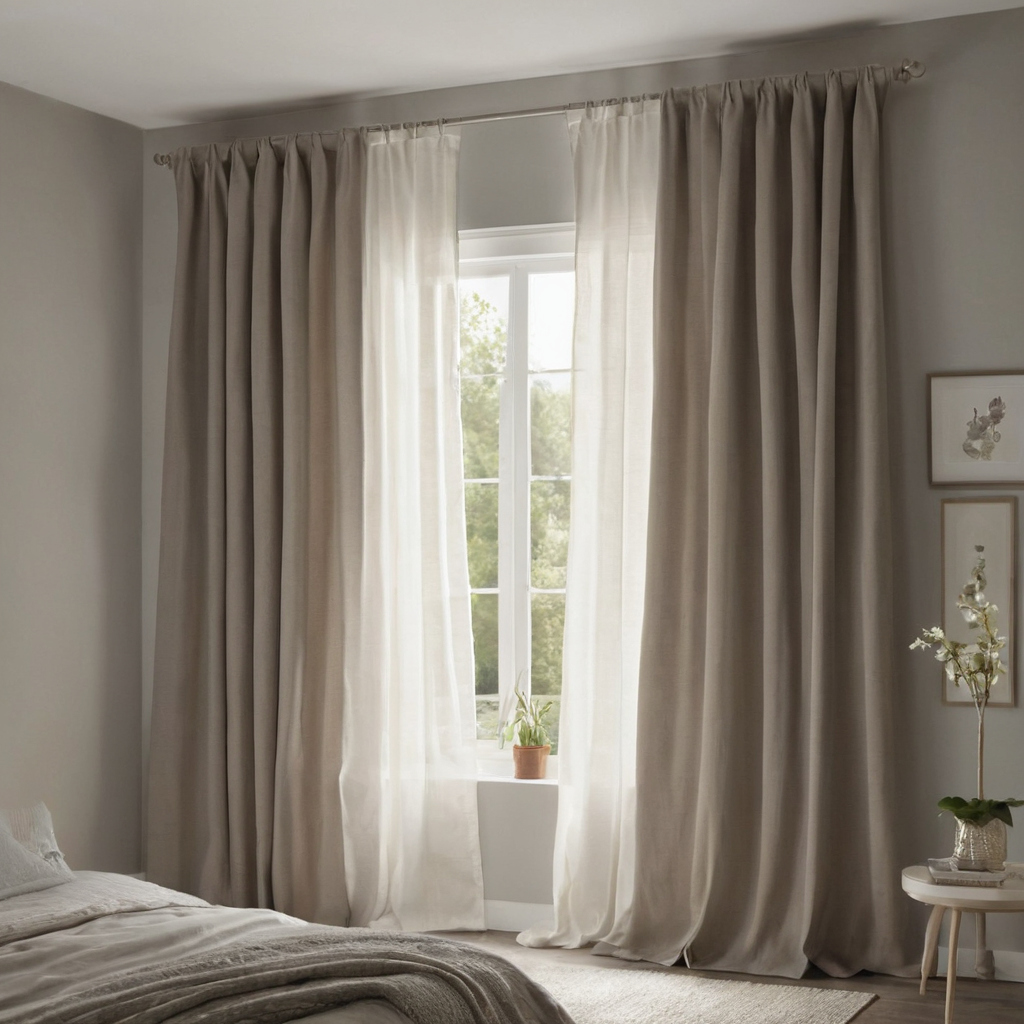
Blackout performance depends more on edge control and mounting position than on dark-looking fabric shown as an editorial planning reference.
Visible edge leakage and overall room illuminance are separate observations. Also check electric sources: Sleep Foundation guidance notes that artificial light, including screens, can affect sleep for some people, especially near bedtime. Once the dominant leak is identified, the rental terms determine which treatment is reasonable.
Blackout curtains, lined shades, and removable inserts suit different rental constraints
Blackout curtains suit rooms where a renter may install a rod; lined shades save wall space but demand closer measuring; removable inserts improve temporary edge control only when ventilation, condensation, finish damage, and emergency access remain acceptable.
Which window treatment is best for each renter scenario?
| Treatment | Dominant leak | Drilling | Daily opening effort | Ventilation access | Removal risk | Maintenance | Suitable renter scenario |
|---|---|---|---|---|---|---|---|
| Lined panels | Top, sides, centre, hem | Usually | Low | Good | Rod holes | Wash or vacuum | Drilling allowed; window used daily |
| Outside-mount roller shade | Sides and sill | Usually | Low | Good | Bracket holes | Dust | Night-shift sleep; clear wall area |
| Cellular blackout shade | Sides and sill | Usually | Low | Good | Bracket holes | Vacuum gently | Compact window; limited projection |
| Temporary blackout fabric | Loose edges | No | High | Restricted | Paint or residue | Refit often | Short lease |
| Hook-and-loop panel | Perimeter | No | Medium | Restricted | Adhesive damage | Check attachment | Existing blind retained |
| Tension treatment | Perimeter | No | Medium | Good | Trim marks | Retension | No-drill recess |
| Rigid removable insert | Small perimeter gaps | No | High | Poor | Condensation or scuffs | Inspect glazing | Maximum temporary darkness |
- Start with one layer. Add another only when pillow-position checks still show disruptive leakage.
- Wide or bay windows often need divided treatments; manufacturer limits and bracket surfaces control feasibility.
- Windows behind beds favour compact shades or removable panels that do not require reaching around curtain folds.
The correct treatment still fails if its ordered dimensions preserve the gaps it was meant to close.
Correct measurements determine whether blackout curtains cover an east-facing window
Window-opening dimensions are insufficient. Measure the trim, surrounding wall, sill or floor position, hardware projection, and nearby obstructions, then size the treatment from the manufacturer’s instructions with deliberate coverage beyond the bright opening wherever the room permits.
- Record opening width and height at the top, middle, and bottom. Keep the smallest inside-mount dimension separate from the largest dimension.
- Measure the outer trim, recess depth, wall clearance above the trim, and clear wall on both sides. Seasonal sunrise movement means either edge can become the dominant leak.
- Measure sill projection, sill-to-floor distance, and the projection of handles, locks, cranks, screens, and retained blinds.
- Mark every radiator, HVAC register, baseboard heater, outlet, furniture edge, and operable escape window. Check bedroom furniture clearance around windows and heaters before selecting a rod or shade position.
- Read the product instructions for finished width, panel fullness, centre overlap, side return, stack-back, bracket spacing, and inside-mount deductions. No universal overlap or fullness figure suits every curtain heading, mechanism, or window.
- Transfer bracket positions to removable tape and test window operation before ordering.
Outside mounting usually reduces gaps when enough wall area is available
An outside mount can cover head and side gaps left by an inside-mounted shade, but uneven trim, projecting sills, shallow wall areas, or nearby furniture can prevent the treatment from sitting flat.
| Mount | Gap check | Operational check |
|---|---|---|
| Inside | Compare recess depth and manufacturer deductions at the head, sides, and sill. | Test handles, locks, screens, and retained blinds. |
| Outside | Compare bracket drawings with available wall, trim projection, and planned overlap. | Confirm the window opens fully and the treatment clears hardware. |
Illuminance alone does not describe every biological effect of light. A Frontiers in Photonics consensus report identifies the human circadian system as blue-sensitive and discusses concern about blue-enriched LEDs. The report does not test dawn through curtains, so use a meter for before-and-after comparison rather than as a complete sleep prediction.
Curtain length must avoid unsafe contact while still controlling lower-edge light
Use sill-length curtains where a radiator, heater, register, desk, or projecting sill blocks longer panels. Apron-length curtains can cover below-sill leakage without reaching the floor. Floor-length curtains suit an unobstructed wall when the hem avoids heat sources, airflow paths, cleaning equipment, and walking routes.
Paints, cleaning products, building materials, and furnishings are among the indoor sources of volatile organic compounds identified by the EPA. Air and inspect new treatments according to their care instructions, particularly if the material or adhesive has a noticeable odour.
Do not assume a generic safety clearance. Follow the heater, HVAC, curtain, and mounting-hardware manufacturers’ instructions, plus applicable building or fire guidance.
Renter-safe blackout installation must protect walls, window operation, and emergency access
A no-drill installation is renter-safe only after checking its load rating, surface compatibility, removal method, and effect on window operation. Adhesive hooks, tension rods, and compression shades can still fall or mark paint.
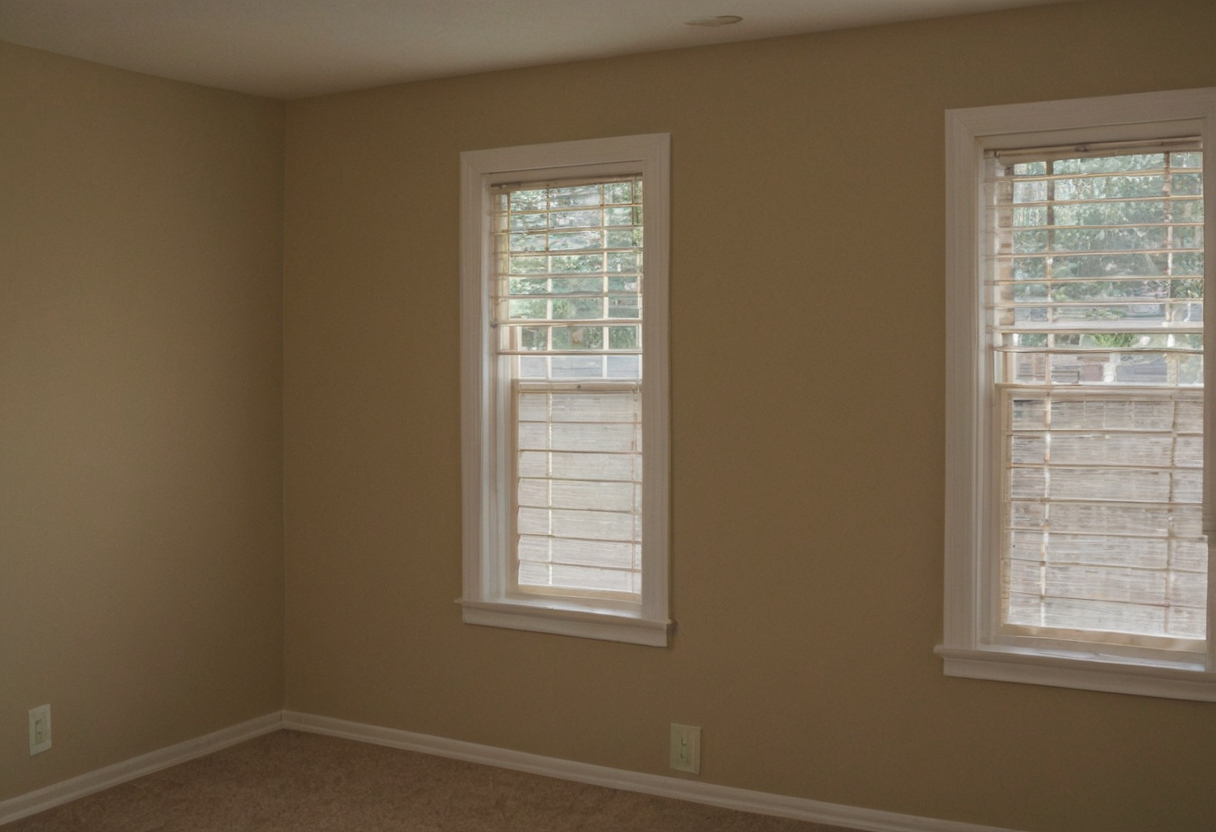
Renter-safe blackout installation must protect walls, window operation, and emergency access shown as an editorial planning reference.
No-drill hardware must be matched to the finished treatment weight
Hardware selection starts with the finished load: panels, liner, rod, rings, finials, and overlap accessories. Compare that load with the manufacturer’s rating for the exact span, mounting orientation, and surface. Repeated curtain pulling adds operating force beyond static weight, especially across a wide window.
- Read the lease before making holes, applying adhesive, repainting, or attaching hardware to trim.
- Follow the stated cleaning, paint-curing, temperature, installation, and removal instructions.
- Avoid adhesive on fragile plaster, textured walls, wallpaper, or recently painted surfaces unless the manufacturer approves them.
- Choose cordless operation where practical, particularly around children and pets, and never create an accessible cord loop.
A removable blackout insert must not trap moisture or disable the window
A close-fitting insert can conceal condensation against cold glazing. Remove the insert regularly and inspect the glass, frame, sealant, fabric, and sill for dampness, staining, or mould.
The installed treatment must leave locks, handles, screens, and ventilation accessible. For a bedroom emergency escape window, confirm local requirements and test removal without tools or delay. Once those risks are controlled, test the darkest simple setup before buying another layer.
Test the darkest simple setup before adding another window-treatment layer
The efficient buying sequence is to measure the window, block its largest leak, and compare the result under similar morning conditions. Add a second layer only if the first treatment still exposes the sleeper before the intended wake time.
- Establish the baseline. Check light at the sleeper’s eye position before the alarm, noting the sensor position and direction.
- Find the dominant leak. Identify whether most light enters at the head, sides, centre overlap, or lower edge.
- Choose one reversible correction. Close the largest gap with a wider panel, removable insert, return, overlap, or edge channel.
- Install to specification. Follow the hardware maker’s surface, load, and removal instructions. If an adhesive emits volatile organic compounds, the EPA recommends increased ventilation during use.
- Retest before buying more. Stop after one treatment if premature light no longer reaches the pillow and the window remains easy to open, clean, ventilate, and uncover.
Before-and-after light checks must use the same position and morning conditions
Record the date, local sunrise time, weather, measurement time, treatment position, meter position, reading, and visible leak. Keep electric lights and the door in the same state. Solar timing changes through the year because the ecliptic is tilted 23.5° relative to the celestial equator, but buildings, vegetation, and reflections still control what enters this particular room.
A suitable lux meter should have documented accuracy, range, cosine response, and calibration status. Illuminance supports repeatable comparisons, but it does not capture spectrum, exposure duration, or individual sensitivity. No single lux reading guarantees better sleep.
A systematic review of non-pharmacological sleep interventions found no clear overall pattern of positive findings, although increased daytime light was among the three most promising interventions. The research concerned long-term care settings, not ordinary rental bedrooms, so it does not prove that blackout curtains improve sleep in every home.
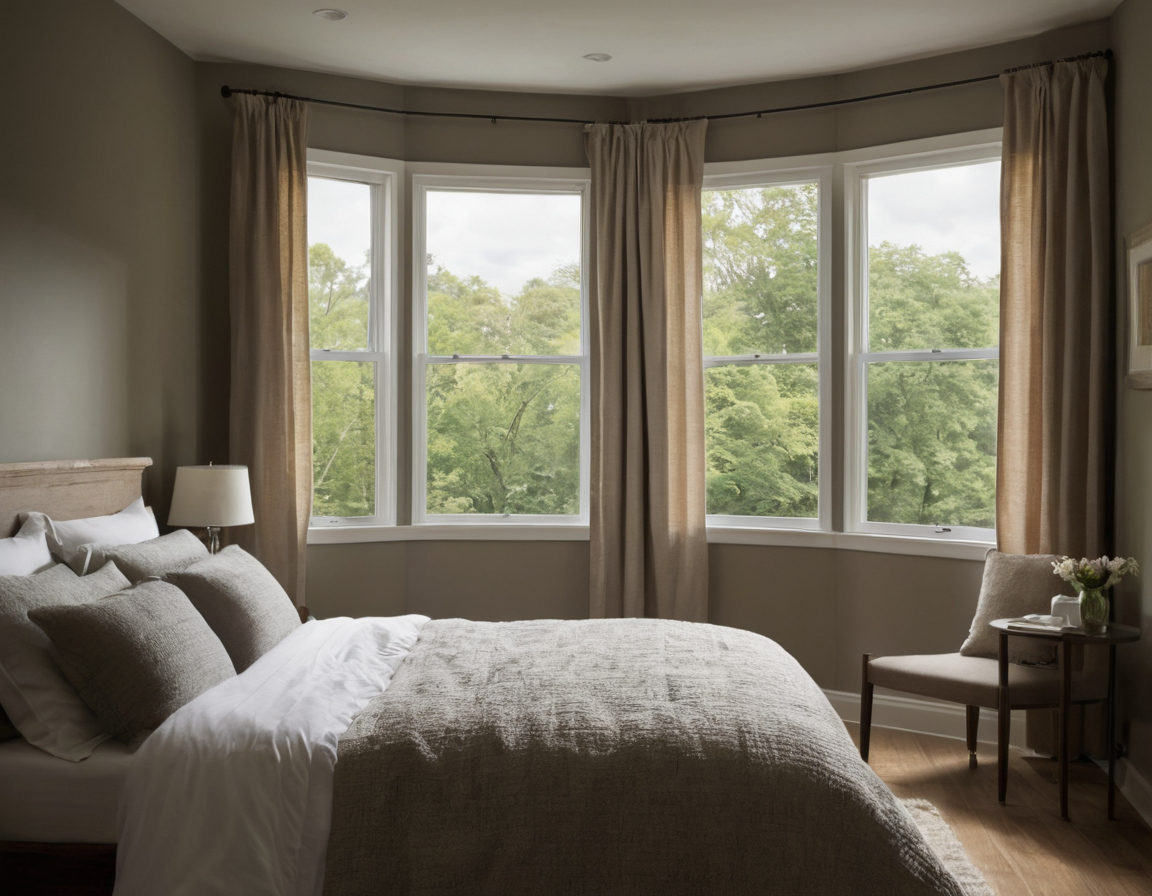
Test the darkest simple setup before adding another window-treatment layer shown as an editorial planning reference.
Verify light at the pillow, control the largest leak, then buy the least permanent treatment that works.
Frequently asked questions
East-facing windows require treatment according to the sleeper’s schedule and measured leakage, not orientation alone.
Is it better to sleep with blackout curtains or wake with natural morning light?
Natural morning light can support waking when it arrives near the intended wake time. Blackout treatment is more useful when dawn repeatedly reaches the sleeper too early, as with night-shift work or a late sleep schedule.
Are east-facing bedroom windows good or bad for sleep?
East-facing windows are neither inherently good nor bad. Season, obstructions, glazing, bed position, sensitivity, and wake time determine the effect.