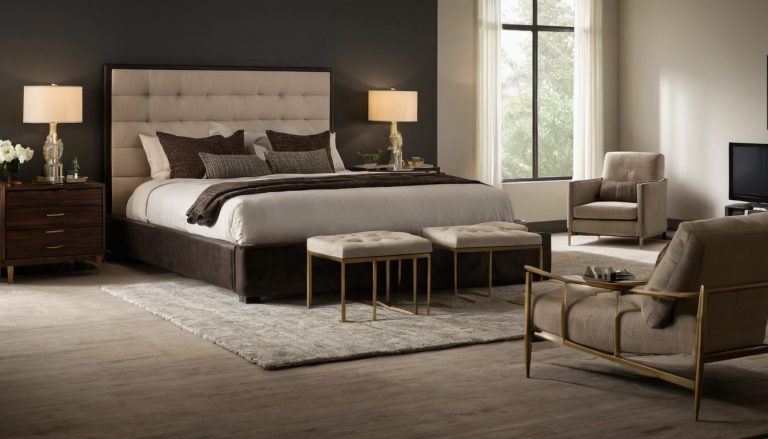
Catalog-led bedroom planning fails when furniture fits the mood board but cannot be walked around, opened, delivered, or plugged in. Start with clearance, then choose the bed, wardrobe, dresser, and nightstands.
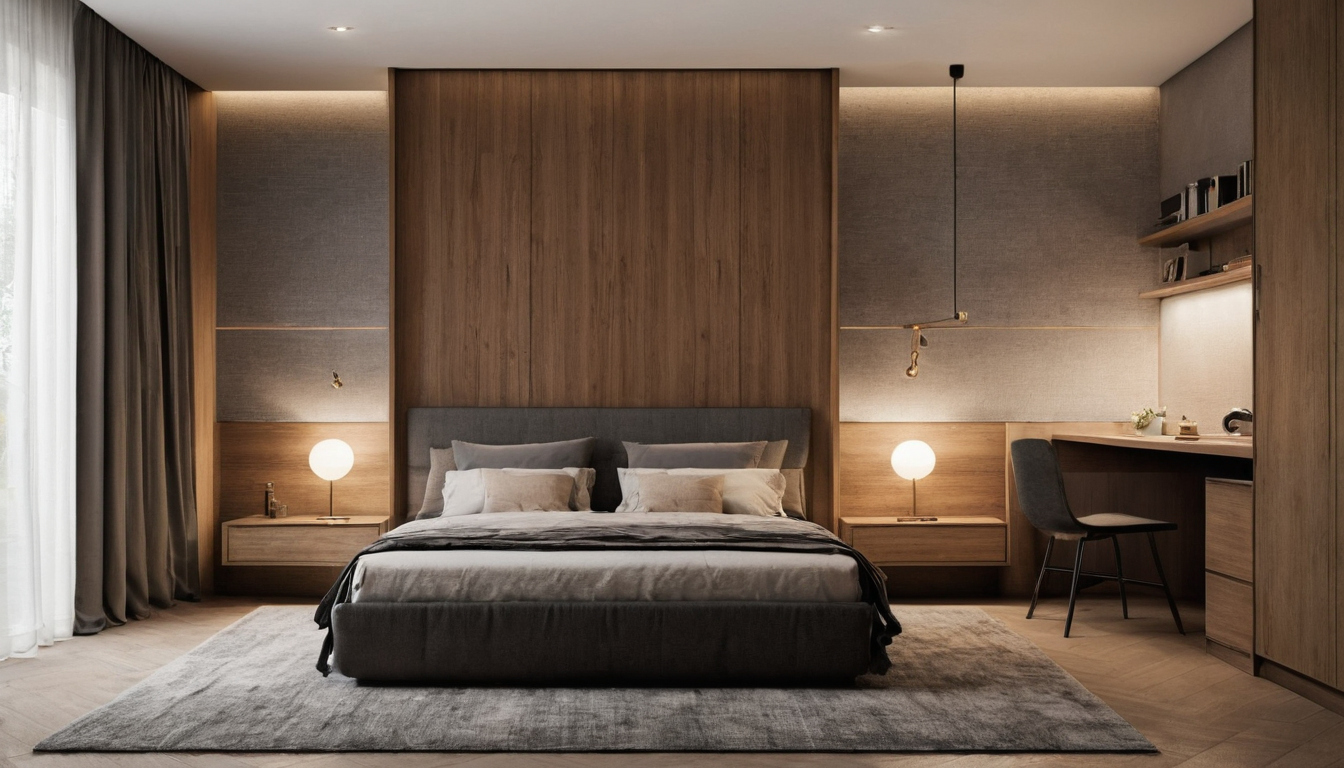
Bedroom Furniture Layout by Clearance: How Much Space Beds, Wardrobes, and Nightstands Need shown as an editorial reference for proportion and finish coordination.
How much clearance does furniture in bedroom layouts need before you buy anything?
Plan bedroom furniture by operating space first: the useful room is the clear floor left after doors, windows, services, storage, and walking routes are respected.
Minimum, comfortable, and generous bedroom clearances are different decisions
| Clearance tier | Typical use | Planning consequence |
|---|---|---|
| 18 in minimum squeeze | One-sided bed access or compact guest rooms | Possible, but bedding, drawers, and cleaning feel tight. |
| 24 to 30 in comfortable | Bed sides, entry paths, wardrobe routes | Works for daily use without constant sidestepping. |
| 36 in generous | Primary bedrooms and two-person circulation | Allows easier passing, dressing, and drawer use. |
Accessibility is a separate brief. The 2010 ADA Standards specify a 30 by 48 inch clear floor space for wheelchair positioning.
The usable bedroom footprint is smaller than the wall-to-wall measurement
Measure windows, radiators, HVAC grilles, closet doors, outlets, switches, curtain stack space, and traffic routes before placing furniture. Damp closets or exterior-wall condensation should be corrected promptly, as the EPA mold and moisture guide advises.
Which bed size and bed frame depth will fit the bedroom without blocking circulation?
The bed drives most bedroom interior ideas because mattress size is not the finished bed footprint.
Mattress size is not the same as bed footprint
- Start with the mattress. Common sizes are twin 38 by 75 inches, twin XL 38 by 80, full 54 by 75, queen 60 by 80, king 76 by 80, and California king 72 by 84.
- Add the frame. Upholstered rails, sleigh ends, canopy posts, thick headboards, and footboards can turn a comfortable aisle into a squeeze.
- Check structure before style. Wirecutter looked for slats no more than 3 inches apart and at least 500 pounds of capacity for queen frames.
Storage beds need side or foot clearance that normal beds do not
- Side drawers need a pull zone. Many need roughly 18 to 24 inches to open, plus space to crouch.
- Foot drawers need the bed-end aisle. Test the drawer fully open before placing a bench, dresser, radiator, or closet door nearby.
How much space do wardrobes, closet doors, and dressers need to work properly?
Wardrobes and dressers need clearance for both the user and the moving part, so the zone in front of storage can be larger than the unit.
Hinged wardrobes need a door-swing zone and a standing zone
Hanging wardrobes are often 22 to 24 inches deep, while shallow folded-storage cabinets may be 14 to 18 inches deep. A hinged wardrobe door usually swings out by roughly its own width, so plan at least 30 inches in front where possible. Avoid hinged wardrobes opposite a bed in a narrow lane. For broader storage context, see this guide to wardrobe planning and storage expectations.
Sliding wardrobes save swing space but still need access space
Sliding wardrobes remove the door arc, but tracks add depth and only part of the opening is visible at once. The user still needs standing room to reach rails, baskets, and shelves.
Dressers opposite beds must be checked with drawers fully open
Low dressers commonly run 18 to 22 inches deep before drawer extension. An open drawer can project another 12 to 18 inches. If it blocks the walkway, choose a tall chest, shallower closet system, or built-in storage.
How much space should be between a bed, nightstand, wall, and outlet?
Nightstands should follow reach, bed height, side clearance, and outlet access, not just the matching logic of cool bedroom sets.
Nightstand height should follow the mattress height
Nightstand tops usually work best within 2 to 4 inches of the finished mattress height after the frame, mattress, and topper are installed. Leave a few inches between bed and nightstand so bedding can be tucked, drawers can open, and outlets remain reachable.
Small bedrooms may need wall shelves, sconces, or one-sided nightstands
Small rooms often work better with one nightstand, a 10 to 12 inch deep floating shelf, or a wall-mounted drawer. Plug-in sconces need a nearby outlet and cord route; hardwired sconces need switch planning before wall finishes.
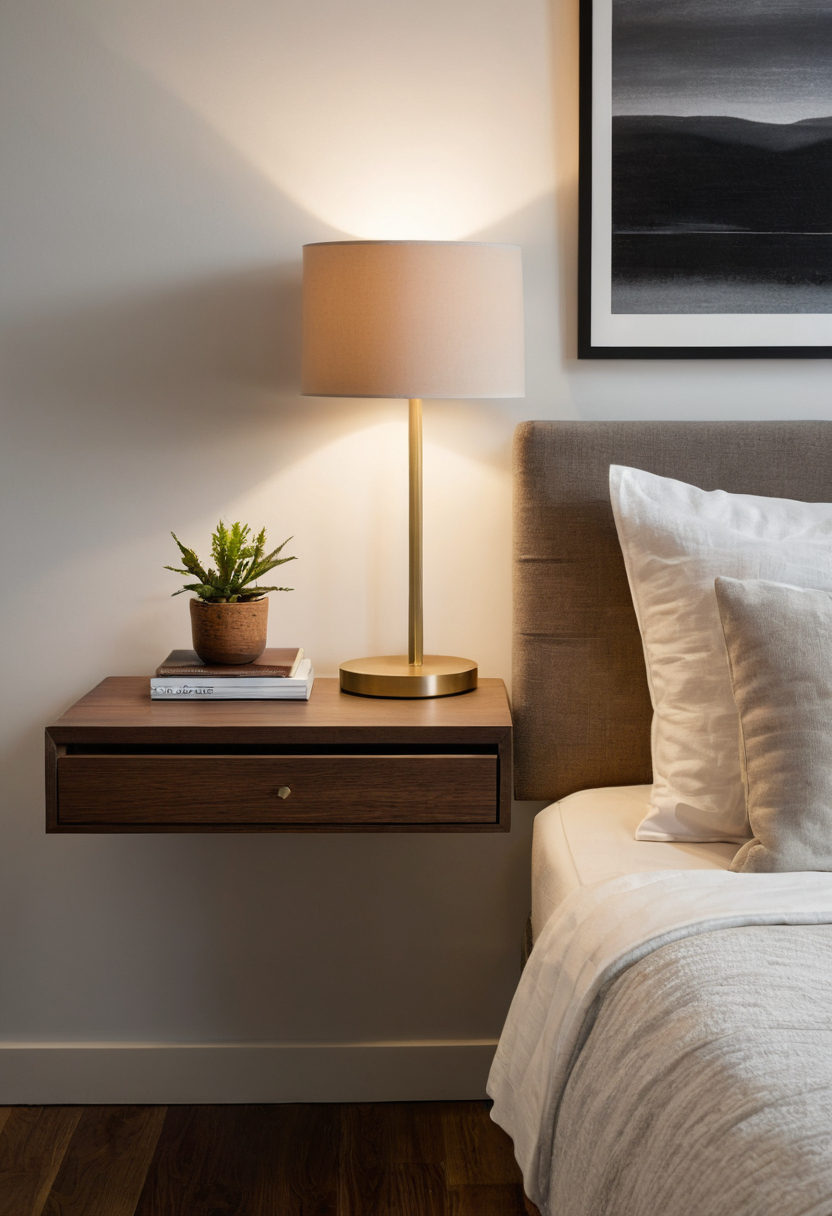
How much space should be between a bed, nightstand, wall, and outlet shown with floor, wall, and fixture relationships visible.
What bedroom layout workflow prevents buying furniture that cannot fit through the room or operate?
A reliable workflow moves from measuring to clearance testing to procurement before any large bed, wardrobe, dresser, or matched set is ordered.
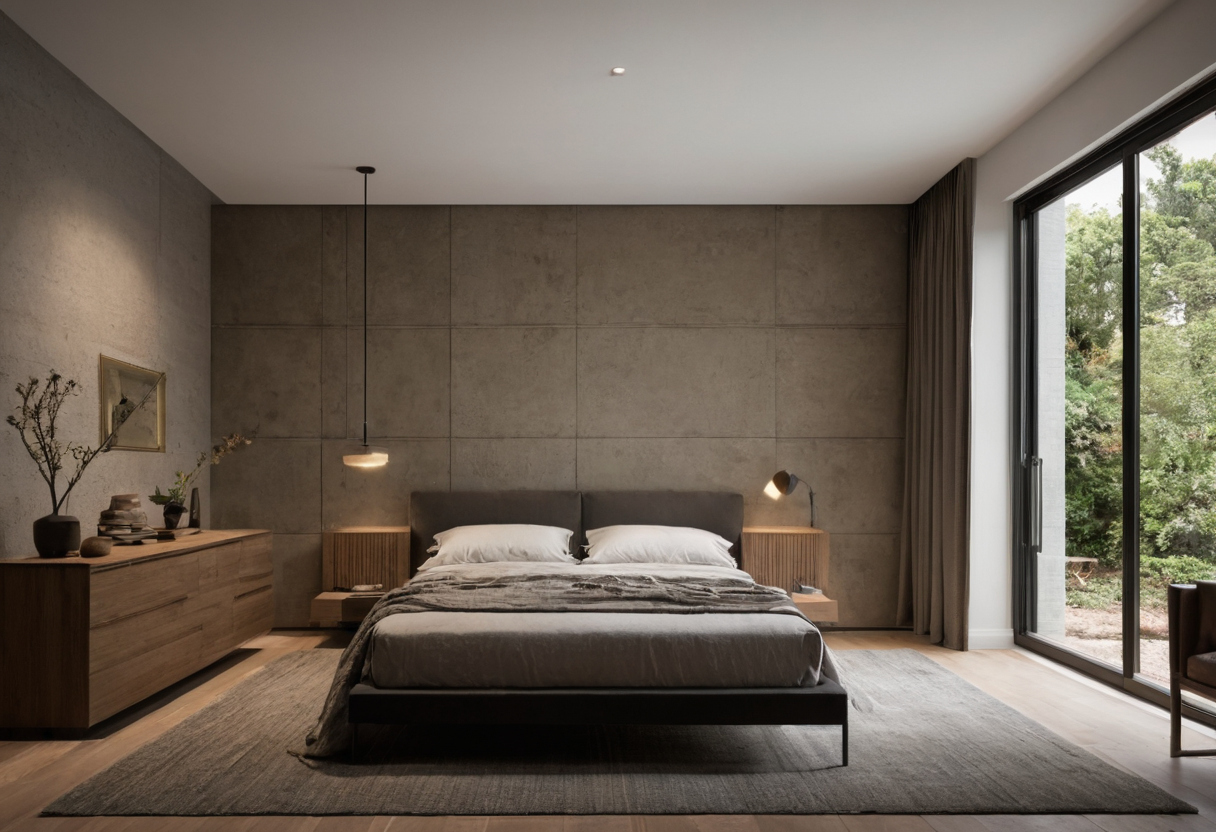
What bedroom layout workflow prevents buying furniture that cannot fit through the room or operate shown as a planning reference for layout, scale, and material decisions.
Tape the furniture footprint before ordering the bedroom set
- Measure the room shell: record length, width, ceiling height, alcoves, windows, door swings, radiators, HVAC grilles, outlets, switches, and curtain stack space.
- Tape the furniture plan: mark the bed, nightstands, dresser, wardrobe, and walking paths with painter’s tape.
- Mark the moving parts: add drawer extensions, wardrobe arcs, storage-bed pullouts, and standing zones.
Delivery access can be the hidden constraint in bedroom furnishing ideas
Measure building doors, bedroom doors, corridors, stair turns, elevator interiors, low ceilings, and tight landings. Compare those dimensions with packaged dimensions, not only assembled dimensions.
Sockets, switches, HVAC grilles, and windows can veto a good-looking layout
Keep access to outlets, switches, supply and return grilles, curtains, radiators, and window operation. Before buying larger storage, consider decluttering before choosing bedroom storage, then check return windows and restocking terms.
Which bedroom furniture layout works for small bedrooms, primary bedrooms, and shared rooms?
Bedroom layout choices should change with room size, storage load, and the number of daily users.
Small bedroom layouts should trade furniture count for clearance
A small bedroom often works better with a twin, full, or tightly planned queen than with a complete matching set. Use a tall chest, wall shelf, closet organizer, or under-bed drawers when a wide dresser blocks the walking path.
Primary bedroom layouts need two-person circulation and storage access
A primary bedroom should be tested as a two-user room, not as a symmetrical catalog image. A queen or king with paired nightstands needs side clearance for both sleepers, plus a separate operating zone for a wardrobe or dresser.
Shared rooms need drawer and walkway clearances for more than one user
A shared bedroom works when each user can reach a bed, storage, and exit without crossing another person’s open drawer. Twin beds can share a central nightstand, bunk beds need ladder access, and trundles need a clear pull-out zone.
What are the biggest bedroom furniture placement risks to check before approval?
The biggest risks are blocked movement, unusable storage, poor door operation, unsafe delivery assumptions, and furniture that fights building services.
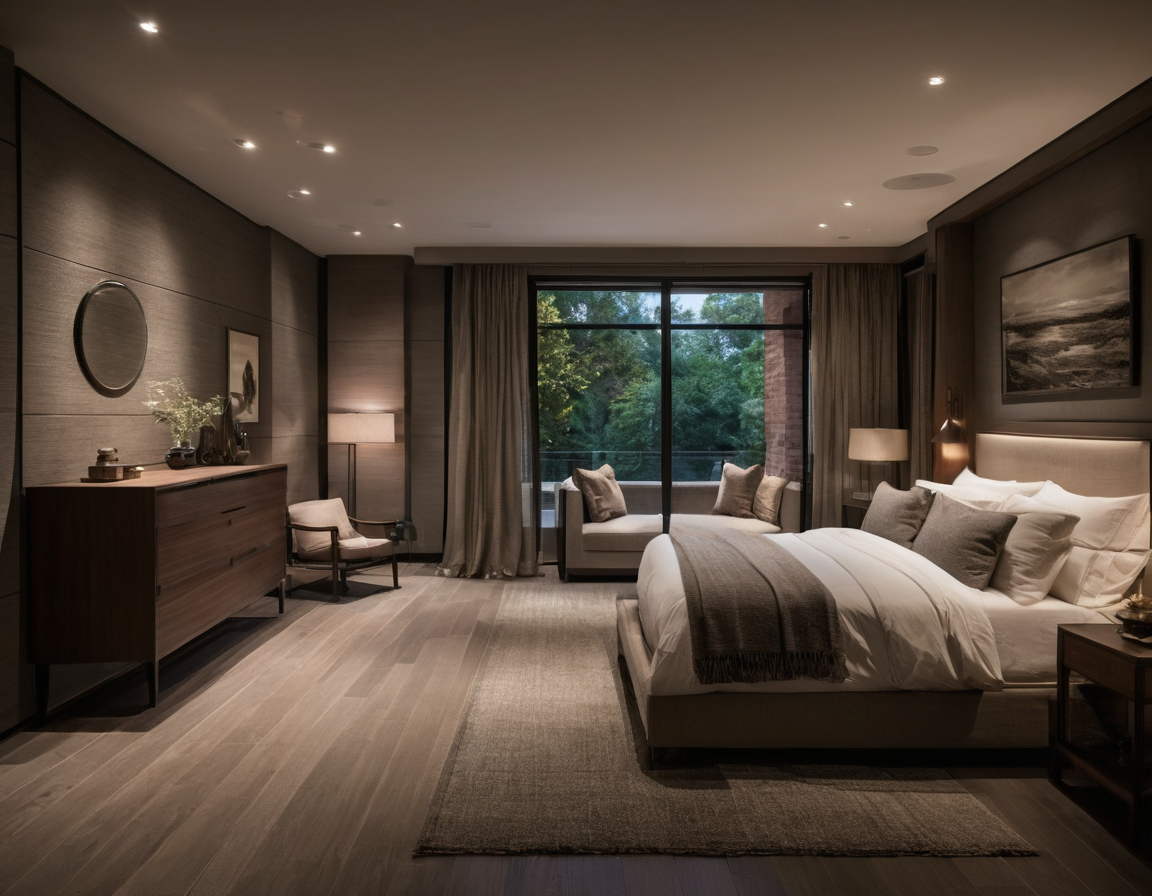
What are the biggest bedroom furniture placement risks to check before approval shown as an editorial reference for proportion and finish coordination.
The 2/3 furniture rule is useful only after clearance is confirmed
The 2/3 rule can help relate a bed, headboard, rug, bench, or artwork to the wall or furniture below it. It cannot approve clearance. A bench may look right and still block the wardrobe.
The most common bedroom placement mistake is ignoring moving parts
Check every moving part before approval: room door, closet door, wardrobe door, dresser drawer, storage bed drawer, trundle, curtains, operable window, outlet access, HVAC grille, and emergency egress path. For custom, oversized, or non-returnable pieces, approve the taped footprint, delivery route, and service clearances before paying the deposit.
FAQ
How much space do you need between a bed and a nightstand?
Leave a few inches so bedding can move, drawers can open, and outlets remain reachable. Match the nightstand top within about 2 to 4 inches of the finished mattress height.
Is 18 inches enough between a bed and a wall?
Eighteen inches is a squeeze clearance. It can work for one-sided access or a guest room, but 24 to 30 inches feels better for daily use.